

Build a Gaming Creator Brand That
Works Without Going Viral
Most gaming channels look interchangeable.
Branding fixes that and turns casual traffic into a loyal audience.
branding Systems
The Foundation of Your Channel
Branding is the operating system of a gaming channel. It signals authority, filters the right audience, and drives long-term growth. A structured brand identity connects visual decisions to strategic outcomes. Random aesthetics create noise. A defined brand system creates recognition.
Manabrand breaks branding down into four core pillars: Brand Promise, Trust Signals, Visual DNA, and Tone of Voice. These frameworks apply across live streams and video content alike. The goal is a channel that stays instantly recognizable and converts casual viewers into a stable audience.
Beyond Aesthetics
Measuring Brand Equity Across Streams and Videos
A logo is not a brand. Most gaming channels invest heavily in visuals and ignore everything else.
The radar charts below map that gap – and show what a structurally sound channel looks like by comparison.
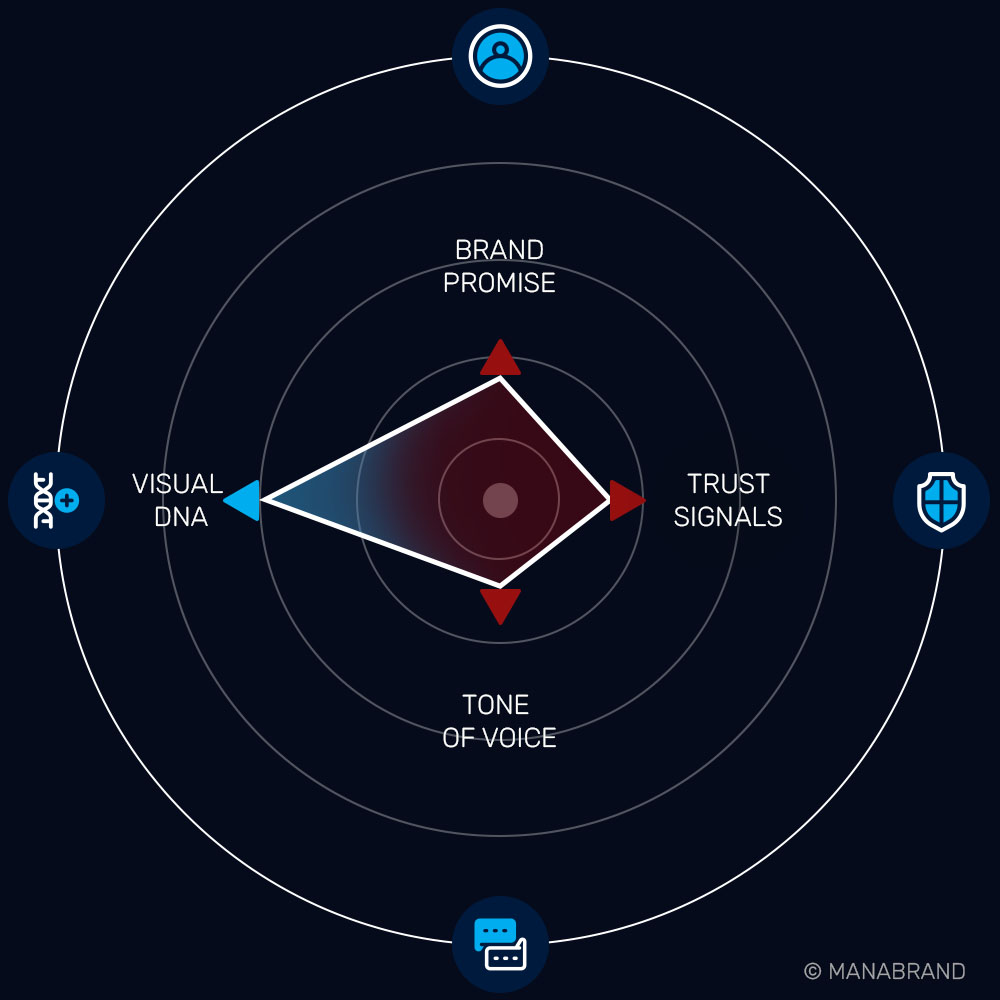
The Amateur Trap (Imbalance)
Focus: Visual Overload over Strategic Substance.
Analysis: Over-investment in overlays, logos and thumbnails creates the illusion of a brand. Without a defined Brand Promise, consistent Tone of Voice, and functional Trust Signals, there is no architecture beneath the surface. The channel looks credible. It is not.
The Result: Clicks without retention. Viewers arrive and do not come back. No structural depth means no authority – and no foundation for monetization.
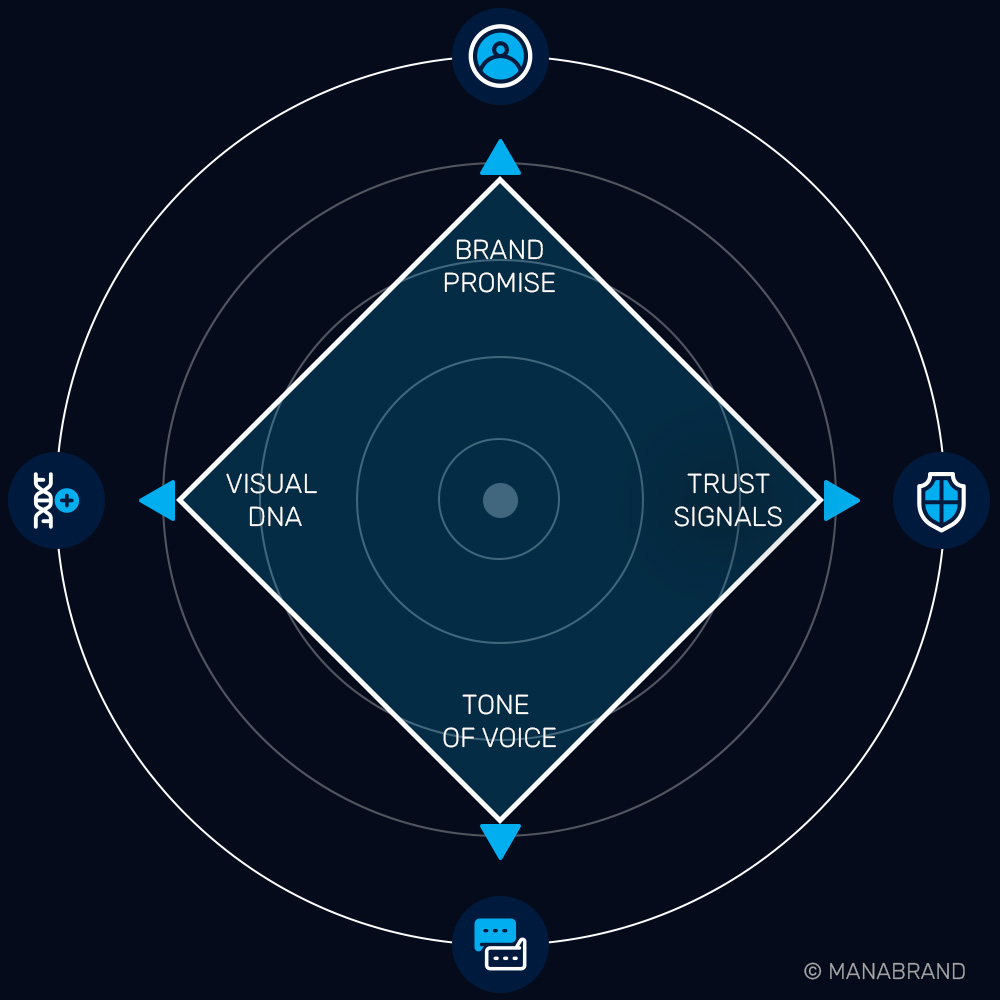
The Studio Standard (Balance)
Focus: Full Channel Authority.
Analysis: All four pillars operate at equal weight. Brand Promise defines the strategic direction. Trust Signals build credibility. Visual DNA creates recognition. Tone of Voice ensures consistency across every format and platform. Nothing is decorative. Everything is functional.
The Result: A channel that compounds. Recognition drives reach. Credibility drives retention. Structure drives revenue. This is what sustainable audience growth looks like.
YOUR NEXT STEPS
Build the Four Pillars of Branding
The radar chart above shows the structural gap. These four pillars close it. Each one addresses a different layer of channel authority – and all four need to develop in parallel.

Visual DNA
The optical framework of a gaming channel. Color systems, typography, and stream overlays work together to create immediate recognition. Consistency across platforms is not a style choice. It is a structural requirement.

Tone of Voice
The strategic personality behind every piece of content. A defined vocabulary, editorial pace, and communication style make a channel predictable in the best sense. Viewers know what to expect and come back because of it.

Brand Promise
The specific value a channel delivers, consistently, across every upload and broadcast. Not a tagline. An operational contract with the audience. It defines content direction and filters out everything that dilutes authority.

Trust Signals
The verifiable markers that separate serious channels from amateur setups. High-fidelity audio, a reliable publishing schedule, and consistent production quality are not optional upgrades. They are the baseline for audience trust.
From Structure to Execution
The four pillars define what to build. The guides below show how to build each one. For a chronological starting point that covers the full setup – streaming, video, and brand foundation – the Master Blueprint is the right place to start.
Latest Insights
Guides for Building a Recognizable Channel Brand
How to Find Your Gaming Creator Niche
Most gaming creators fail for the same reason: they never define what they actually make. Talent and consistency are not enough without a clear content direction. This guide breaks down how to find a gaming niche with real demand, low saturation, and a defensible position, built through market analysis, language-market gaps, and content-type matching.
Gaming Creator Branding 101: Building a Channel Brand That Outlasts the Algorithm
In a market flooded with daily uploads, AI-generated content, and thousands of new gaming channels launching every week, visibility has become a scarce resource. For most gaming video creators and streamers, breaking through the noise feels structurally impossible. Strategic branding is no longer an aesthetic choice – it is the mandatory foundation for long-term channel authority and audience retention.
Free Download
Find out if your brand identity is built
on a solid foundation.
Core Knowledge
Frequently Asked Questions
Why is branding essential for gaming channels?
Branding is the structural foundation of a gaming channel. It builds viewer trust, signals production authority, and differentiates a serious channel from an amateur setup. Without it, consistent audience growth is not possible.
What is the difference between a logo and a brand identity?
A logo is a single visual identifier. A brand identity is the complete system behind a channel: Visual DNA, Tone of Voice, Trust Signals, and Brand Promise. A logo labels content. A full brand identity builds a stable audience.
What role does Visual DNA play in channel growth?
Visual DNA covers color systems, typography, and layout consistency across all platforms. These elements train viewers to recognize content instantly in a crowded feed. Recognition reduces friction for new viewers and reinforces authority for returning ones.
Should branding be finalized before launching?
No. Launch with a clean, minimal foundation and treat branding as an iterative system. Prioritize audio quality and content consistency first. Scale the visual and strategic architecture once the core audience starts to take shape.
Can a strong brand improve Click-Through Rate?
Yes. A consistent visual system trains viewers to recognize thumbnails and stream previews before reading a title. That pattern recognition increases CTR directly. Structural visual consistency builds the pattern recognition that single thumbnail design cannot.
Does branding affect monetization?
Directly. Sponsors and platform programs evaluate channel authority before entering any agreement. A structured brand signals operational seriousness and reduces the perceived risk for partners. That foundation reduces the barrier to monetization and makes partnerships easier to sustain.
When is the right time to rebrand?
When the current identity no longer reflects the strategic direction of the channel. A rebrand is not a visual refresh. It is a deliberate signal of repositioning. Execute it only when the content output has already shifted, not in anticipation of a change.
How do creators maintain brand consistency over time?
Through documented Standard Operating Procedures. A master brand document covering hex codes, typography rules, and layout specs removes guesswork from every production. Operational discipline is what separates channels that scale from those that drift.